Should you have a comedy show online?
Short answer, no.
Long answer…
Keep reading.
Or, skip the reading, and Contact Me directly.
COVID, and Zoom, changed corporate dynamics.
From meetings and fundraisers to private parties and large-scale festivals, virtual events became the norm for a while.
It also allowed for hiring lecturers, comedians, musicians, and speakers from anywhere in the world regardless of location.
That said, virtual shows lack energy, and focus.
People are distracted, farting around in other tabs (Jeffrey Toobin) and doing anything but focusing on the laughter at hand.
Do I know what I’m talking about? Check my Corporate Page and see.
Why Zoom Comedy Shows Need to Stay in 2020
During the lockdown days of 2020, the world did what it could to survive—emotionally, socially, professionally. Office meetings went remote, family reunions became Brady Bunch grids of pixelated faces, and—because we comedians are nothing if not attention-starved—stand-up comedy tried to adapt.
And that’s how we got Zoom comedy shows.
It started with the best of intentions: comedians still wanted to perform, audiences still wanted to laugh, and no one wanted to leave the house. But let’s be honest—it was a bandage on a bullet wound. Zoom comedy was a noble experiment, but now that we’re back in the real world, it’s time to put the laptop mic down and slowly back away.
Here’s why Zoom comedy shows don’t work—and never really did.
1. Comedy Is a Live, Shared Energy Experience
Stand-up comedy isn’t a monologue. It’s not a TED Talk or a podcast. It’s a dialogue—between the comic and the audience. It lives and dies on energy, on laughter that builds, on tension that breaks, on shared moments that are impossible to recreate in isolation.
On Zoom, you’re performing from your bedroom to 50 people all muted by default. No laughs. Zero groans. A lack of vibe, or personality. You’re throwing your punchlines into the abyss and praying for a chuckle in the chat. Stand-up without feedback is like karaoke without music—just a lonely person talking to themselves in public.
2. Laughter Is Contagious—But Not on Mute
There’s a reason comedy clubs pack the tables close together. Laughter is a social cue. One person laughs, the next person joins in, and before you know it the room’s on fire. You don’t get that on a virtual call. You get silence. Or worse, you get one awkward laugh coming through a laggy mic four seconds late, just enough to remind you that comedy is dying a slow digital death.
3. Tech Problems Kill the Rhythm
In comedy, timing is everything. Even a one-second delay can ruin a perfectly structured joke. And Zoom is the land of glitches, audio drops, and that ever-fun moment where you realize you’ve been frozen mid-punchline for the last 20 seconds.
“Oh, sorry, what was that? You cut out.”
Well, there goes the joke.
No amount of high-speed internet can replicate the fluid rhythm of a live show. A well-oiled set becomes a stuttering mess when your punchline gets eaten by a buffering wheel.
4. You’re Competing with Literally Everything Else
In a comedy club, you’ve got a captive audience. Drinks in hand, eyes on stage. On Zoom? You’re sharing screen space with emails, dogs, kids, laundry, and whatever’s happening on Netflix in the background. Half your audience is only there in spirit—the other half might be ordering groceries during your closer.
Virtual shows don’t demand attention. They’re too easy to tune out of. Stand-up needs to command attention, and nothing kills your authority faster than having to ask someone, “Can you turn your mic on so I know if you’re laughing?”
5. There’s No Substitute for the Real Thing
Let’s not kid ourselves. Virtual shows were a survival mechanism. And in some niche cases—corporate gigs, international one-offs—they might still serve a function. But as a regular way to perform stand-up? Hard no.
Comedy isn’t just about words—it’s about presence, eye contact, body language, crowd work, reading the room, and reacting in real time. That’s the magic. That’s what makes it live theater, not content creation.
Conclusion: Let It Die
Zoom comedy had its moment. It was a lifeboat in a sinking year. But we’re back on land now, and it’s time to stop pretending that virtual shows can deliver real laughs.
To the brave comics who tried to make Zoom work: we salute your hustle. To the audiences who tuned in and chuckled through the chaos: we thank you. But let’s never do that again.
Comedy belongs in the room—with the lights low, the drinks flowing, and the laughter loud.
This is the final blog in this series.
The previous blog was: How far in advance should I book a comedian?
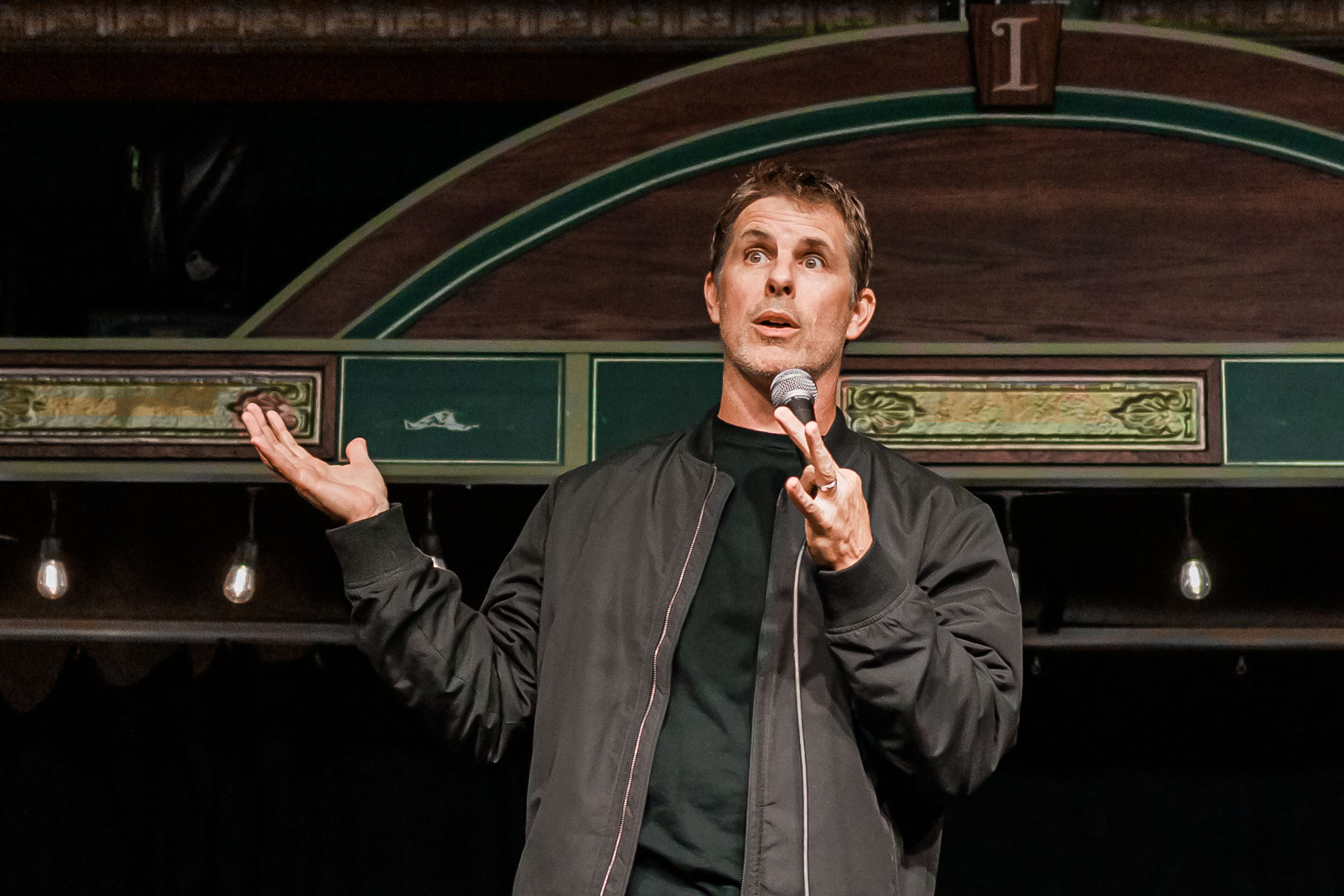
Photo by Apollo & Ivy Photography